New Sentinel 360 Service Helps Colleges Get Ahead of “Ghost Student” Fraud
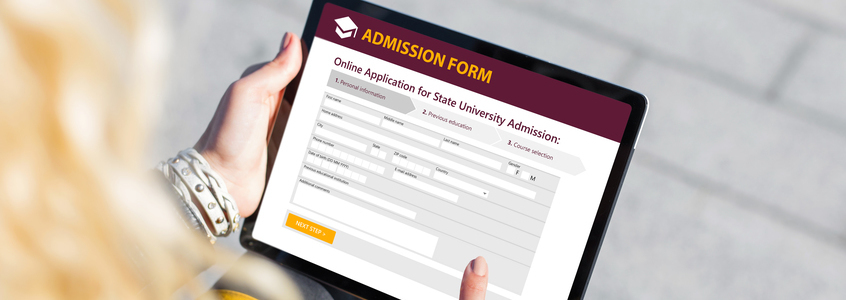
 Higher education is facing a new kind of threat: one that doesn’t show up in classrooms but drains millions of dollars and valuable institutional resources. Known as “ghost student” fraud, this rapidly growing scheme exploits the rise of online enrollment and increasingly sophisticated AI tools. In response, the National Student Clearinghouse is stepping in with a new solution designed to spot early warning signs.
Meet Sentinel 360, a platform built to help colleges and universities identify emerging patterns and signals so they can make informed decisions. At its core, Sentinel 360 identifies enrollment and behavioral data patterns that may indicate suspicious activity. Instead of relying solely on institution-level signals, it leverages a powerful advantage: national-scale visibility.
Because nearly 3,600 higher education institutions already report 97% of all postsecondary enrollment data to the Clearinghouse, Sentinel 360 is uniquely positioned to identify patterns that individual schools simply can’t see on their own. It delivers trusted, privacy-aligned intelligence to help schools identify fraud and respond with confidence.
Why “Ghost Students” Are Such a Big Problem
Ghost student fraud isn’t just about financial aid theft, though the numbers are staggering.
The real cost goes deeper. Institutional resources are wasted processing fake enrollments, staff time is diverted away from supporting real students, and seats and opportunities are taken from legitimate learners. When universities fall victim to this fraud, trust and integrity within the system are undermined.
Fraud rings often operate across multiple institutions at once, exploiting gaps in visibility. For example, California community colleges reported 1.2 million fraudulent FAFSA applications in 2024 ─ a scale that highlights how coordinated and widespread these schemes have become.
Why the Clearinghouse Is Uniquely Positioned to Help
For over three decades, the Clearinghouse has helped institutions understand enrollment and outcomes. Now with Sentinel 360, the Clearinghouse is helping institutions protect them as well.
“Institutions have told us about the growing impact of ghost student fraud, from strained resources to lost opportunities for legitimate students trying to build their futures,” said Melba Amissi, Chief Customer and Operations Officer at the National Student Clearinghouse. “We knew we had both a responsibility and the ability to act. With the depth and integrity of the enrollment data we steward on behalf of the higher education community, the Clearinghouse is uniquely positioned to help address this challenge. Sentinel 360 is the result, and a clear extension of our mission to serve institutions, learners, and the workforce communities that rely on them.”
How Sentinel 360 Works
Sentinel 360 focuses on early detection. By identifying unusual patterns, such as shared addresses across multiple applications or questionable enrollment behaviors, the platform flags potential fraud cases for further review by the institution. In many cases, this happens before financial aid is disbursed, which is critical for preventing losses.
It also strengthens collaboration across institutions. When one school identifies activity, that insight contributes to the broader national dataset, helping others stay ahead of similar threats.
Built for Compliance
Beyond surfacing these signals, Sentinel 360 helps institutions meet federal requirements. Schools are mandated to report suspected fraud involving federal funds to the Department of Education’s Office of Inspector General.
As “ghost student” frauds become more common, regulatory scrutiny around fraud is increasing. Sentinel 360 facilitates this critical compliance through integrated workflows that surface issues for schools to review and address before NSLDS, audits, or corrective reporting are required, specifically cases where individuals were reported as enrolled but never actually attended.
A Collective Approach to a National Problem
What makes Sentinel 360 different is its network advantage. Rather than each institution fighting fraud independently, the platform turns shared data into a collective defense system. Patterns identified at one institution can help protect many others.
“No other solution offers the comprehensive, national perspective that the Clearinghouse provides,” said Sean McTighe, Vice President of Compliance, Data Reporting and Strategy. “By identifying broad behavioral trends and patterns, we augment an institution’s existing identity verification system to signal potential fraud. This data is then fed back into a national database, allowing institutions to partner together and finally gain control over this escalating financial fraud crisis.”
How Can Institutions Get Started?
To participate in Sentinel 360, institutions must submit advanced registration data and use the Clearinghouse’s Enrollment Reporting and DegreeVerify services.
Advanced registration data builds on existing Clearinghouse data exchanges, allowing institutions to unlock additional value from data they already provide. These requirements ensure the platform has the data it needs to deliver meaningful, actionable insights.
Ghost student fraud is only getting smarter, more coordinated, and more costly. Sentinel 360 represents a shift from reactive cleanup to proactive prevention. By combining national-scale data with early signals, it gives institutions something they’ve long needed: a way to stay one step ahead.
To learn more about Sentinel 360, visit sentinel360.studentclearinghouse.org.
Additional Resources:
Enjoy the convenience of easy and secure data exchanges
Simplify your data exchanges while saving time and money.
Learn how we protect student privacy
Education partners throughout the nation trust the Clearinghouse because they know we take our commitment to student privacy very seriously.